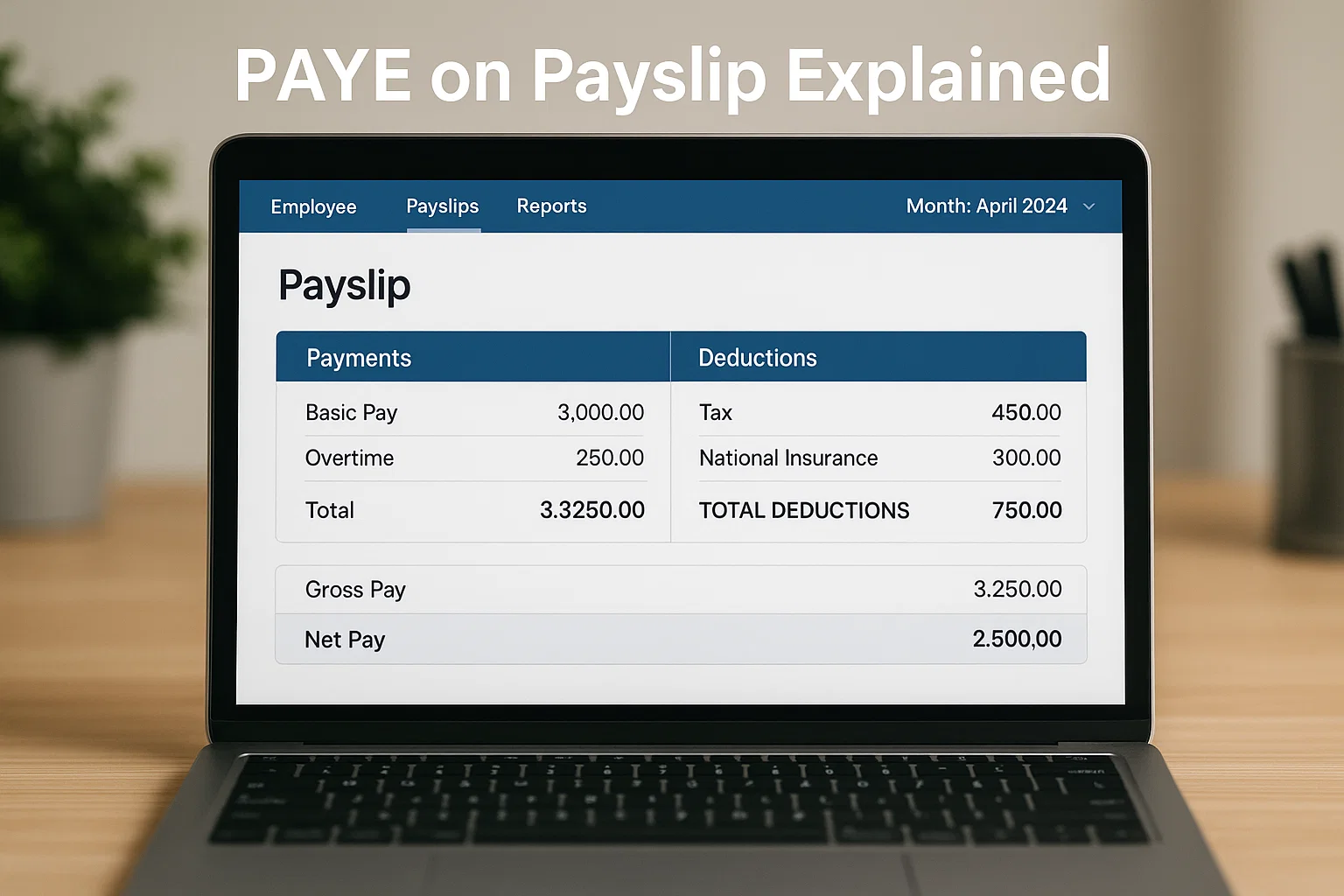
It’s small enough to ignore when everything looks normal, yet frustrating enough to make you wonder why the number never quite matches what you expected.
PAYE looks technical, almost like something you should already understand, but no one actually explains it in plain English. So here’s the simple truth: once you get a grip on how PAYE works, your entire payslip suddenly makes sense. And better still, you start noticing those little things like tax codes, emergency deductions, and overpayments that can put real money back in your pocket.
This guide untangles those knots gently. No jargon. No stiff finance-speak. Just a calm walk through what PAYE is doing on your payslip, how it’s calculated, why HMRC relies on it, and what it means for you when the numbers feel off. If you’ve ever looked at your payslip and thought, “Am I paying too much?” or “Why is my tax suddenly higher this month?”, stay with me. You’ll understand every line by the time we reach the end.
Understanding What PAYE Actually Means
Let’s start with the heart of the whole thing. PAYE stands for Pay As You Earn, and it’s exactly what it sounds like: a system where tax is collected little by little from every salary payment you receive. Instead of waiting for one big annual bill, the UK government takes your income tax directly through your employer. That’s all it is. Nothing dramatic, nothing mysterious. Just a steady drip of tax so you’re not hit with a mountain of it later.
The important thing to understand is this: PAYE is essentially the mechanism HMRC uses to collect your income tax. It’s not an extra tax, not something separate, and definitely not a penalty. You’ll sometimes see people asking, “Is PAYE income tax?” and the easy answer is yes PAYE is simply how most employees pay their income tax. That’s why it shows up on every payslip you receive, whether you work full-time, part-time, or even on a temp contract.
Here’s where things get interesting. Your PAYE deduction isn’t a fixed number. It shifts, adjusts, rises, or dips depending on your tax code, your earnings, and any benefits or allowances attached to your employment. And once you understand those moving pieces, PAYE becomes far less intimidating. Instead of a random figure appearing each month, you begin to see a pattern almost like reading your payslip fluently for the first time.
What the PAYE Reference on Your Payslip Tells You
Right next to the PAYE line, you’ll often see something else: the PAYE reference. It looks like a jumble of numbers and letters, but it’s actually one of the most important identifiers on your entire payslip. Think of it as your employer’s tax fingerprint. It’s the code HMRC uses to recognise who’s paying your tax and how your income should be recorded.
When you apply for benefits, update your tax code, check your national insurance record, or contact HMRC about an underpayment, you’ll often be asked for your PAYE reference. That code tells HMRC, “This is the employer handling this person’s tax,” and without it, they can’t track your records properly. If you ever get lost on the HMRC website or aren’t sure why your tax code changed, your PAYE reference is the first clue to follow.
On digital systems like Sage, iTrent, SD Worx, and MyView, the PAYE reference usually sits near the top or right side of the payslip. It’s neat, understated, and easy to overlook but essential. When things go wrong or when you’re trying to check if everything’s right with your payroll, this little code becomes incredibly useful.
How PAYE Is Actually Calculated Behind the Scenes
PAYE moves quietly. It doesn’t announce its presence. It just takes what it needs based on a few core rules. The calculation might look complicated, but at its core, it follows a simple rhythm.
Every tax year, HMRC gives you something called a Personal Allowance this is the amount you can earn before paying income tax. Most people receive the standard allowance, reflected in the common tax code 1257L. Once your earnings cross that threshold, PAYE kicks in automatically.
Your PAYE calculation takes into account:
- Your tax code
- Your pay frequency (weekly, monthly, etc.)
- Any benefits in kind (like a company car)
- Your cumulative income
- Adjustments for prior months
Your employer’s software (Sage, SD Worx, iTrent, Oracle, MyView, and many others) calculates this behind the scenes. So if you’ve ever wondered, “How is PAYE calculated?”, the short answer is: through your tax code and your running earnings across the year. This is why your PAYE can change even if your salary stays the same. A slight adjustment in cumulative earnings or a tax code update can nudge the numbers.
If your tax code is wrong say you’ve been put on an emergency code your PAYE can jump sharply. That’s usually the first sign something needs fixing. So if you’re asking yourself, “Should I be paying PAYE?”, the answer depends on your income. If you earn above the personal allowance threshold, yes. If not, you might be overpaying and due a refund.
Why PAYE Fluctuates From One Payslip to the Next
Some months everything looks familiar. Your deductions line up neatly. Other months, your PAYE quietly increases or dips, and you have no idea why. The truth is, PAYE behaves like a living process. It reacts to whatever your employment situation does.
Here’s what typically causes the changes:
• A tax code update – HMRC adjusts your code when they receive new information.
• Overtime or bonuses – Extra earnings push you temporarily into higher tax brackets.
• Starting or leaving a job – Your first and last payslips often look unusual because the system recalculates from scratch.
• Benefits or deductions – Things like car allowances, student loans, or underpaid taxes from previous years.
• Cumulative corrections – Payroll systems occasionally reconcile past months, leading to small adjustments.
The key thing to remember is that PAYE isn’t static. It responds to changes in your working life, and those little shifts on your payslip are often just reflections of information flowing in from HMRC.
The Meaning of PAYE Employee in Everyday Language
You’ll sometimes see the term PAYE employee on forms, job applications, or government documents. It simply means: you’re an employee whose tax is handled through the PAYE system rather than self-assessment.
This matters because it defines how HMRC expects you to pay your tax. If you’re a PAYE employee, you generally don’t need to file a tax return unless you have secondary income, high earnings, or special circumstances. It’s a status that makes your life easier. Your employer shoulders the responsibility of calculating and sending your tax across each month.
So when HMRC uses the phrase HMRC PAYE employee, it’s not a special category it’s just the standard worker whose tax is sorted automatically.
When You Can Claim Back PAYE Without Any Stress
Here’s the part everyone loves. Sometimes, you pay more PAYE than you should. And when that happens, HMRC must give it back. That’s when people start searching, “Can I claim back PAYE?” or “How do I claim back overpaid PAYE?”.
You can reclaim PAYE in several situations:
- You were put on an emergency tax code.
- You changed jobs quickly.
- You had only part-year earnings.
- You paid tax on income that should’ve been tax-free.
- You overpaid because of incorrect benefits data.
- Your employer used outdated HMRC instructions.
Claiming it back is easier than people think. If you log into your HMRC portal, the system will usually tell you automatically whether you’re owed a refund. Sometimes they send a cheque or bank transfer without you even asking. Other times, you have to claim manually through the P800 system.
Just remember: HMRC never keeps money that isn’t theirs, and when you’ve paid too much, they do return it though sometimes not as fast as anyone would like. If it’s been over eight weeks with no update, that’s when you chase.
Fixing PAYE Problems Before They Drain Your Pay
Every so often, your payslip waves a tiny red flag. Maybe the PAYE deduction feels too heavy. Maybe the tax code looks odd. Maybe HMRC letters start arriving with wording that feels vaguely alarming but also confusing. Whatever the issue, there are a handful of steps that sort out 90% of PAYE problems quickly.
First, check your tax code. If it doesn’t match what HMRC has issued, your employer might be using an outdated version. Then check for emergency tax codes, usually ending with W1, M1, or X. That’s a big sign your PAYE is being calculated in isolation each month rather than cumulatively.
If your PAYE jumps suddenly, ask your payroll team whether any prior earnings have been corrected. Payroll software regularly performs reconciliations that can cause adjustments. And if nothing looks obvious, contact HMRC. They can see much deeper into your record than anyone else.
When your PAYE is too high, the system usually corrects itself once your tax code is updated. When your PAYE is too low, HMRC might adjust your future code to collect the difference gradually. Either way, nothing is final until the tax year ends and your employer is just following the instructions they’re given.
A Few Questions Everyone Asks at Least Once
People tend to circle the same questions, so let’s clear them gently.
What is PAYE used for?
It’s for collecting your income tax throughout the year in manageable slices.
Is PAYE income tax?
Yes. PAYE is simply the way income tax is deducted for employees.
How does PAYE calculate?
By combining your tax code with your cumulative earnings, benefits, and allowances.
Should I be paying PAYE?
If you earn above the personal allowance threshold, yes.
Can I claim back PAYE?
Absolutely anytime you’ve overpaid, HMRC returns the excess.
Each answer becomes much easier once you’re familiar with the layout of your payslip and know where your numbers come from.
Closing Thoughts
Payslips aren’t the friendliest documents in the world, but once you understand PAYE, everything suddenly feels lighter. Your take-home pay makes sense. Those random adjustments become readable.
And more importantly, you stop missing out on refunds you genuinely deserve. PAYE might look rigid, but it’s actually quite fair especially when your tax code is correct and your payroll system is up to date. So the next time you open your payslip and see that deduction sitting quietly under your earnings, don’t just skim past it.
That one line is telling the story of how your income is taxed, protected, and regulated. And now, you finally understand every part of it.

Rachel combines her technical expertise with a flair for clear, accessible writing. A graduate of the University of Edinburgh, she specializes in creating detailed tech-focused content, Govt Jobs, Payslips that educates our readers about the latest in web development and SEO tools at Spinbot blog.