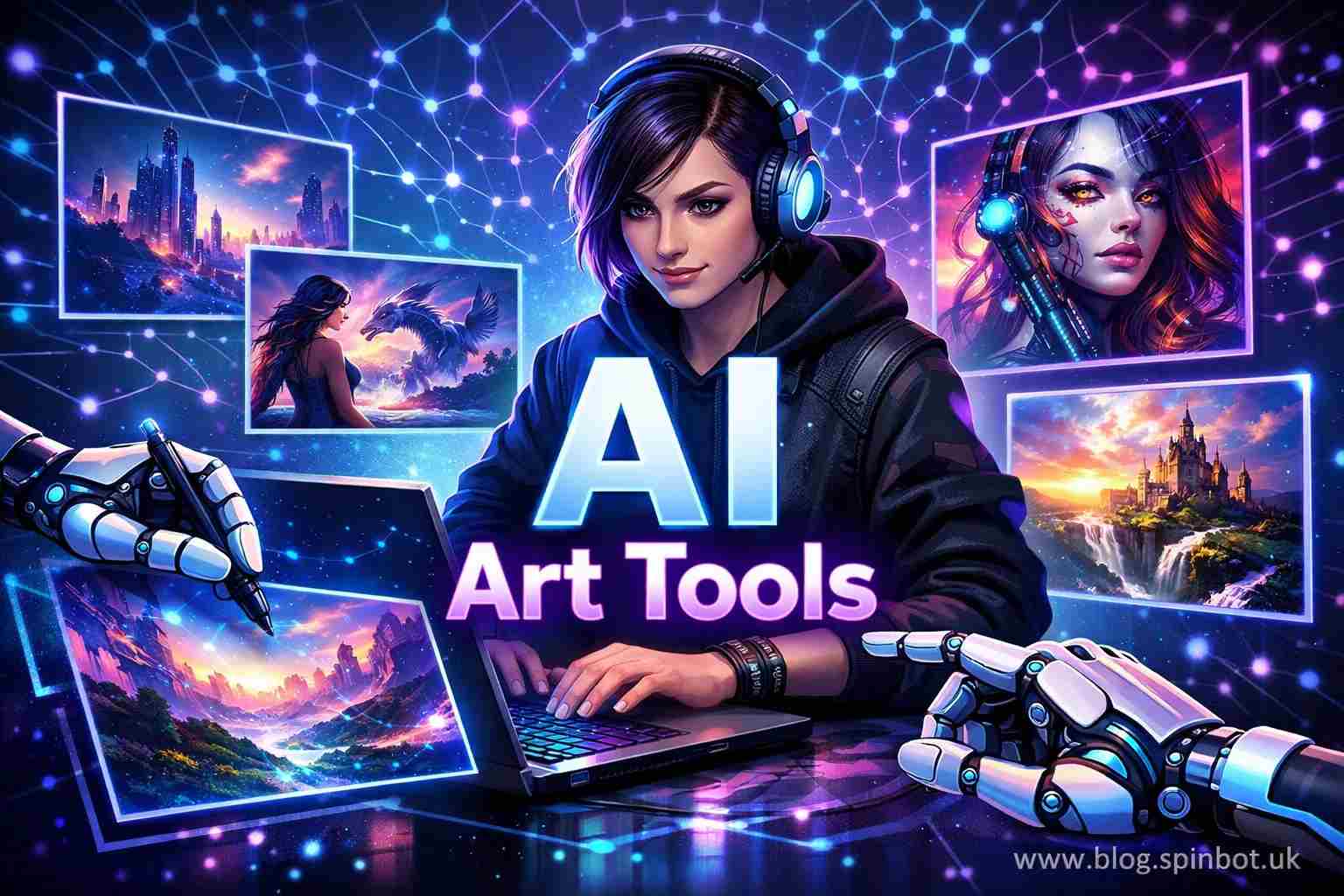
That moment feels a bit magical. It’s also why interest in the AI art generator world has exploded. Designers, bloggers, YouTubers, and everyday creators are using these tools to produce illustrations, posters, thumbnails, concept art, and marketing visuals without touching a paintbrush.
But what’s really going on behind the scenes? And how can someone with zero design experience start creating impressive artwork with AI?
Let’s break it down.
What is an AI art generator and how does it actually work?
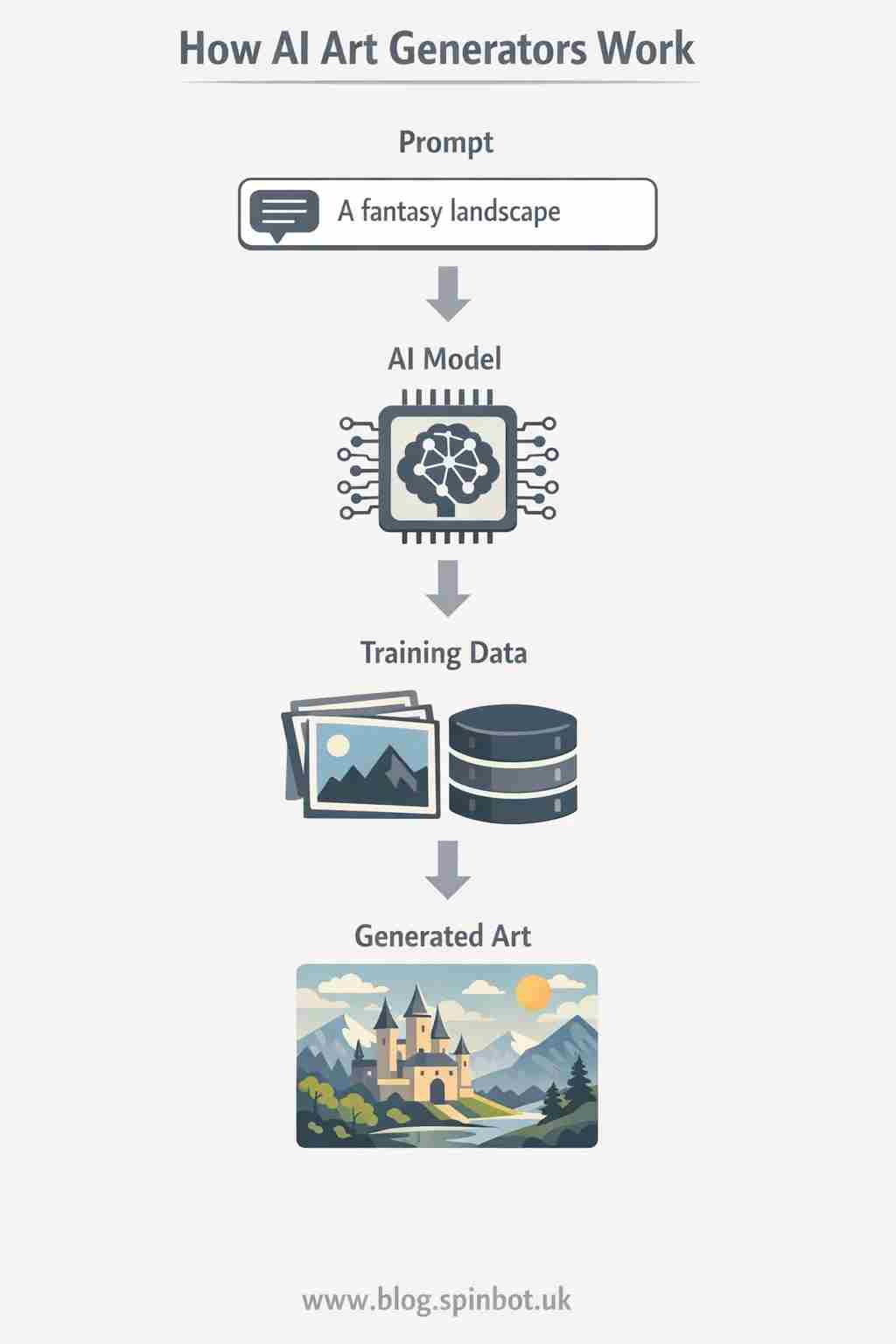
An AI art generator is software that creates images using artificial intelligence models trained on massive datasets of existing pictures. A user writes a text description, called a prompt, and the AI interprets that description to produce a brand-new image.
The system doesn’t copy a specific artwork. Instead, it learns patterns such as colour combinations, shapes, lighting, and artistic styles. When someone enters a prompt, the AI predicts how an image matching that description should look and then builds it pixel by pixel.
In simple terms, the AI acts like an incredibly fast digital artist that has studied millions of images.
The technology powering most modern AI art tools relies on deep learning models called diffusion models or generative neural networks. These systems start with random noise and gradually transform that noise into a coherent picture that matches the prompt.
For example, if a user writes:
“A futuristic city floating above the ocean at sunrise”
the AI model translates those words into visual elements. It understands concepts like skyline, water reflections, lighting, atmosphere, and perspective. Then it combines them into a unique image.
This process happens in seconds, but behind it sits years of research in machine learning and computer vision.
Why has AI art suddenly become so popular?
AI-generated artwork existed for years in research labs, but several breakthroughs made the technology accessible to everyday users.
First, computing power improved dramatically. Training large AI models requires massive processing capability. As GPUs became faster and cloud computing expanded, these models became practical to run.
Second, modern generative models learned how to interpret language more effectively. They can now connect words with visual elements much more accurately than earlier systems.
Third, the internet created an environment where visuals matter more than ever. Content creators need images for blogs, social media posts, YouTube thumbnails, advertisements, and product pages.
AI tools remove a major barrier. Someone who has never studied illustration can still produce attractive visuals.
That combination of accessibility and demand pushed AI art into mainstream creativity.
What is AI art used for today?
The most interesting thing about AI art is how quickly it moved from novelty to everyday tool.
Creators now use AI-generated visuals in many industries.
| Industry | How AI Art Is Used |
|---|---|
| Content creation | Blog illustrations, YouTube thumbnails |
| Marketing | Advertising graphics and social media visuals |
| Game development | Character design and concept art |
| Publishing | Book covers and story illustrations |
| Education | Visual explanations and diagrams |
A blogger writing about technology might use AI artwork to illustrate an article. A YouTuber might generate thumbnails that match the mood of their video. Game developers often generate early character concepts before artists refine the design.
The technology doesn’t replace human creativity. Instead, it accelerates the creative process.
Think of it like a digital sketch assistant that produces ideas instantly.
Which AI art generator tools are popular right now?
Several AI image generators dominate the current landscape. Each one has its own style, strengths, and community.
Some tools focus on realism. Others excel at illustration, anime art, or concept design.
A few of the most widely used platforms include:
Midjourney
Known for highly artistic and cinematic visuals. Many designers prefer it for creative concept art.
DALL-E
An AI image model designed to turn text prompts into images with strong prompt interpretation.
Stable Diffusion
An open model that developers and creators can run locally or customise.
Adobe Firefly
Built for designers working inside Adobe’s creative ecosystem.
Leonardo AI
Popular with game developers and digital artists for character design.
The biggest difference between tools often comes down to style control, image resolution, and prompt accuracy.
Many creators experiment with several platforms before choosing a favourite.
Is there a free AI art generator anyone can use?
Yes. Many AI art tools offer free versions.
These free plans usually limit how many images you can generate per day or restrict resolution size. Still, they provide a great starting point for beginners who want to explore AI creativity.
Some tools give free credits when you sign up. Others allow unlimited generation but place watermarks on images.
The key thing to remember is that the cost of generating AI images has dropped dramatically over the past few years. What once required expensive research software is now available through simple web apps.
That accessibility explains why students, bloggers, marketers, and hobbyists are experimenting with AI artwork every day.
Is AI art expensive to create?
In most cases, AI art is far cheaper than hiring a professional illustrator.
That doesn’t mean AI replaces artists. Professional artists still bring originality, storytelling, and refined style that automated systems cannot match.
But for quick graphics, concept ideas, or experimental visuals, AI generators offer incredible value.
Many platforms charge small monthly subscriptions. Others operate on a credit system where each generated image costs a tiny fraction of a dollar.
For creators producing frequent content, the cost savings can be significant.
Is AI art legal or is it a copyright problem?
This is one of the biggest debates in the AI industry.
The question revolves around how AI models learn from existing artwork during training. Because the models analyse millions of images, some artists worry that their work may influence generated images without permission.
Legal systems around the world are still deciding how to handle this issue.
Right now, most AI art generators allow users to create images freely. However, commercial use rules can vary depending on the platform.
Some tools allow full commercial rights for generated images. Others require paid subscriptions before users can sell or publish the artwork.
Anyone using AI art professionally should always check the licensing terms of the platform they use.
How do you make your own AI art?
Creating AI artwork is surprisingly simple.
The most important ingredient is the prompt. A prompt is the text description that tells the AI what to generate.
A beginner might start with something like:
“Fantasy castle on a floating island at sunset, cinematic lighting”
The AI reads those words and produces an image based on the description.
More experienced creators write longer prompts that include style, colour palette, camera angle, and artistic influence.
For example:
“Epic fantasy castle floating above clouds, sunset lighting, ultra detailed, cinematic concept art”
The more descriptive the prompt, the more precise the result.
Many creators refine prompts repeatedly, generating new images each time until they achieve the look they want.
What skills do AI artists actually need?
One of the biggest myths about AI art is that it requires no skill.
In reality, good results often depend on the creator’s ability to communicate visual ideas clearly.
Successful AI artists usually develop several skills:
Prompt writing
Describing scenes, styles, and details in ways the AI understands.
Visual thinking
Imagining lighting, colour, composition, and perspective.
Image editing
Adjusting AI images using photo editing tools.
Creative direction
Knowing what visual style fits a project or brand.
In other words, the technology generates images, but the creative vision still comes from the person using it.
What are the different types of AI used in these tools?
Artificial intelligence is a broad field, and AI art generation represents only one branch of it.
Most systems fall into a few major categories.
| AI Type | What It Does |
|---|---|
| Narrow AI | Performs one specialised task |
| Machine Learning | Learns patterns from data |
| Deep Learning | Uses neural networks for complex tasks |
| Generative AI | Creates new content such as text or images |
| Natural Language AI | Understands human language |
Generative AI is the category responsible for tools that create art, music, and written content.
Systems like ChatGPT belong to language-based AI models that generate text rather than images.
Which country leads the world in AI development?
Several countries compete for leadership in artificial intelligence research.
The United States remains one of the most influential AI innovators thanks to major technology companies and research institutions.
China has invested heavily in AI infrastructure and talent development. The country focuses strongly on large-scale data and machine learning.
Europe also contributes significantly through universities, research centres, and ethical AI initiatives.
Global AI leadership is constantly shifting as governments, universities, and private companies invest billions into research.
What matters most is that AI development has become a global race involving collaboration as well as competition.
Which jobs will survive the rise of AI?
Whenever new technology appears, people worry about job security. AI raises similar questions.
But history shows that technology usually changes jobs rather than eliminating them completely.
Several roles remain strongly human-driven:
Creative direction
Designing ideas, concepts, and storytelling.
Strategic thinking
Planning campaigns, business strategies, and brand identities.
Human communication
Negotiation, leadership, and emotional understanding.
AI tools may assist with technical tasks, but they rarely replace human judgement or creativity.
In fact, many creative professionals now use AI as a productivity tool rather than seeing it as competition.
How can beginners understand AI without technical knowledge?
Artificial intelligence can sound complicated, but the core idea is actually simple.
AI systems learn patterns from data.
Imagine showing a computer millions of pictures of animals. Over time the system begins to recognise shapes, colours, and features associated with cats, dogs, birds, and other creatures.
AI art generators work in a similar way. They analyse enormous image datasets and learn how visual elements relate to descriptive words.
When a user writes a prompt, the AI predicts how those elements should combine into a new picture.
That ability to learn patterns and generate new content is what makes modern AI tools so powerful.
Why AI art is changing digital creativity
For centuries, creating visual art required years of practice and technical training. AI hasn’t removed the importance of those skills, but it has changed who gets to participate in visual creativity.
Someone with no design background can now generate images that once required specialised tools.
That shift opens the door for new types of creators. Bloggers can illustrate articles. Small businesses can produce marketing graphics. Writers can visualise fictional worlds.
At the same time, professional artists continue pushing creative boundaries using AI as part of their workflow.
The technology isn’t replacing creativity. It’s expanding it.
And the most interesting images we’ll see in the future will probably come from people who combine human imagination with the strange and powerful capabilities of artificial intelligence.
Emily is a skilled content strategist and writer with a passion for digital marketing and SEO trends. A Leeds alumna, she brings her expertise in media communication to Spinbot UK Blog, crafting engaging content that drives traffic and enhances user engagement.