Every few months, a new AI trick shows up online and spreads like wildfire. A few years ago it was AI avatars. Then voice cloning. Now it’s AI face swap video clips showing people appearing in scenes they were never part of. One moment someone is sitting at home. The next, they look like they’re starring in a movie clip or dancing in a viral reel. 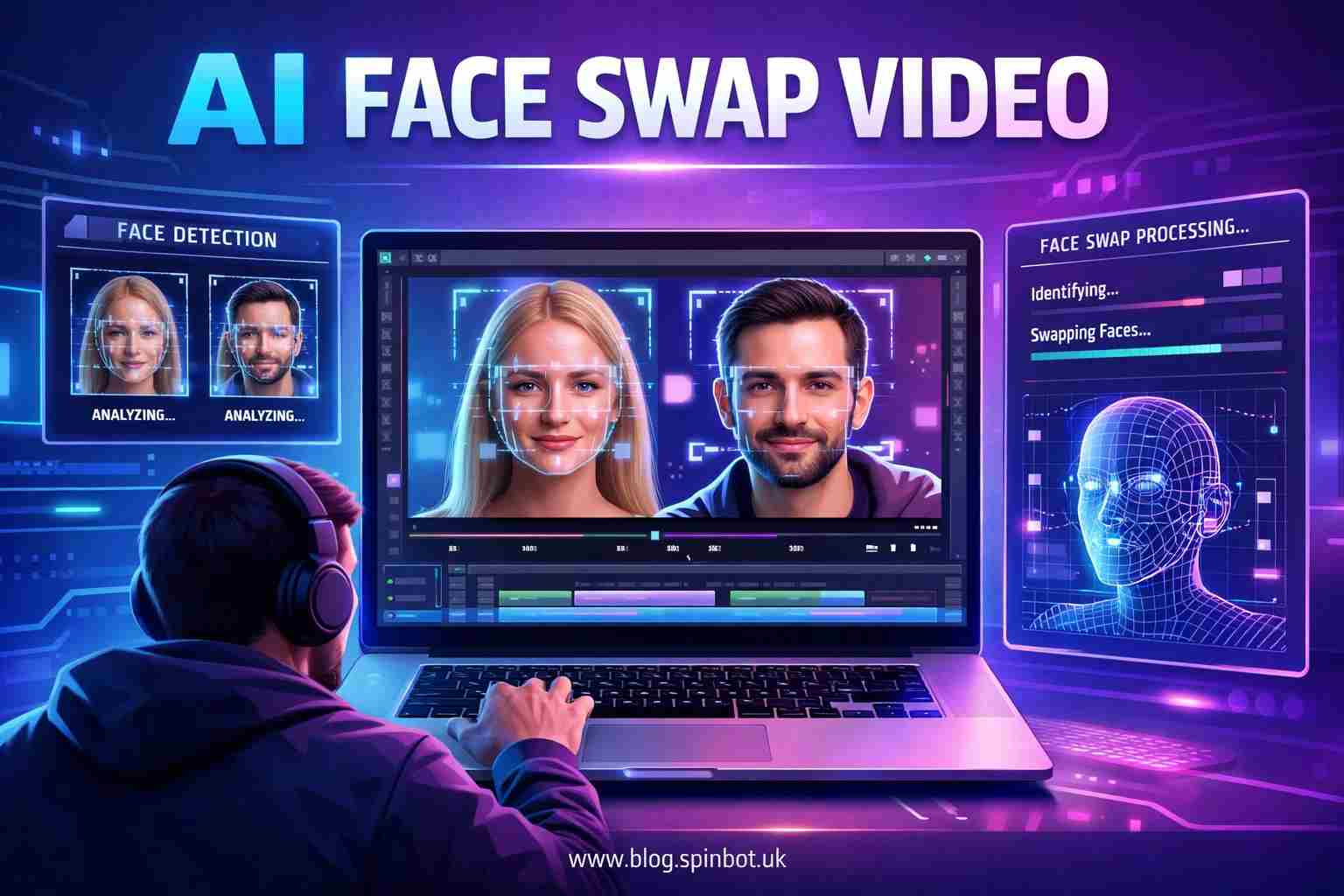
At first glance it feels like magic. But it’s actually clever technology doing careful work behind the scenes.
Before jumping into the tools and techniques, it helps to understand what’s really happening when a computer replaces one face with another inside a moving video.
AI face swap video explained in simple terms
An AI face swap video tool uses artificial intelligence to detect a person’s face in a video, analyse its structure, and replace it with another face while preserving the original movements, expressions, and lighting. The result is a realistic video where a new face appears naturally in the scene without manual editing.
What is AI face swap video technology?
AI face swap video technology is built around one central idea: teaching machines to understand human faces.
A human editor can recognise a face instantly. But a computer must learn how to identify the eyes, nose, mouth, and overall facial shape before it can replace anything. That’s where artificial intelligence steps in.
Modern face swap systems rely on deep learning models trained on huge datasets of human faces. These models learn patterns such as:
- how faces move when people talk
- how lighting changes across facial features
- how expressions alter the shape of the mouth and eyes
- how faces appear from different angles
Once the AI understands those patterns, it can map a new face onto the original one in a video.
Imagine placing a flexible mask over someone’s face in a video. The mask bends and moves with every smile, blink, or head movement. That’s essentially what AI is doing, except digitally and with incredible precision.
The real breakthrough came when neural networks started handling frame-by-frame tracking. Instead of swapping a face in a single image, the AI now follows facial movement across hundreds or thousands of frames in a clip.
That’s why modern AI face swap videos look surprisingly natural.
How to AI face swap video in simple steps
Creating a face swap video used to require advanced video editing software and hours of manual work. Now the process is surprisingly simple.
Most tools follow the same general workflow.
Step 1: Upload the original video
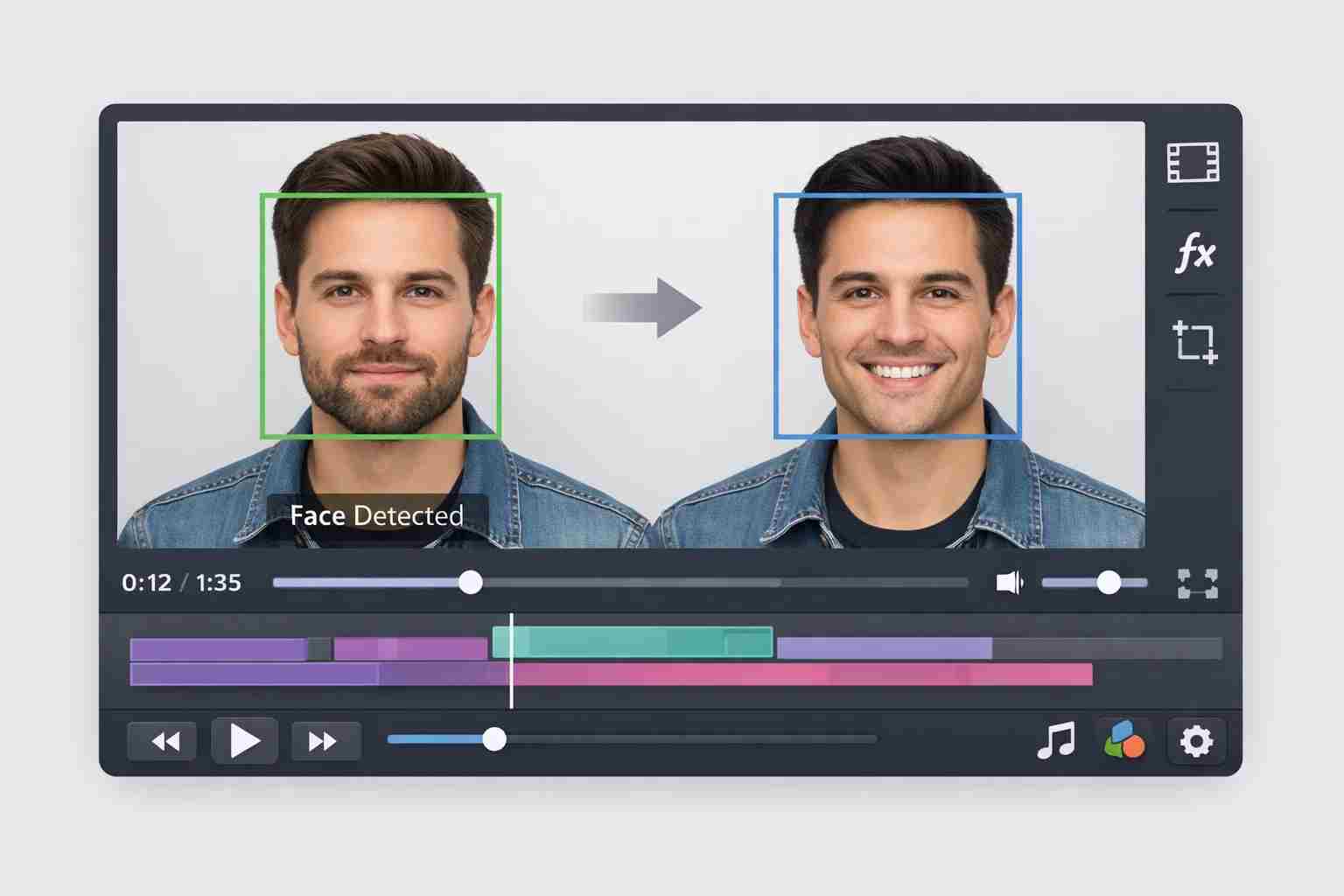
First, the tool scans the video and detects faces in each frame. The AI identifies facial landmarks like eyes, nose, chin, and jawline.
This process usually takes only a few seconds.
Step 2: Upload the face you want to use
Next, you upload a photo of the face you want to place into the video. The AI analyses the image and extracts key facial features.
Step 3: AI maps the face structure
The system compares both faces and creates a digital facial model. It aligns angles, proportions, and lighting so the replacement will match the original footage.
Step 4: Replace the face in every frame
Now the real work happens. The AI applies the new face to each frame of the video while keeping:
- original head movements
- expressions
- lighting conditions
- shadows and depth
This is where modern AI tools really shine.
Step 5: Render and export the final clip
Once the AI finishes processing, the system generates the new video with the swapped face. Most tools allow downloads in common formats like MP4.
The whole process often takes less than a minute.
How does video face swap actually work behind the scenes?
Under the hood, face swapping relies on a combination of AI technologies working together.
Understanding these parts makes the whole process less mysterious.
Facial landmark detection
The first step is identifying key points on a face. AI models typically track around 60 to 120 facial landmarks, including:
- corners of the eyes
- eyebrows
- nose bridge
- mouth edges
- jawline
These points help the AI understand the geometry of a face.
Face alignment
Once the landmarks are detected, the AI aligns both faces so they match in orientation and angle.
For example, if the person in the video tilts their head slightly, the replacement face must tilt the same way.
Deep learning face synthesis
This is the core technology behind face swapping.
Neural networks generate a realistic version of the replacement face that matches the lighting, skin tone, and expressions of the original video frame.
Motion tracking
The AI tracks how the face moves across frames. This allows the new face to follow natural expressions like smiling, blinking, or turning.
Without motion tracking, the swap would look stiff or unnatural.
Final blending
Finally, the system blends the swapped face into the scene. It adjusts colour tones, shadows, and lighting so the replacement face matches the environment.
That final blending stage is what makes modern AI swaps look so convincing.
What is the use of AI face swap today?
While face swapping might seem like a novelty, it actually has many practical uses.
Some are playful. Others are surprisingly useful.
Social media content
Creators use face swap videos to produce viral content. A creator might place themselves into famous movie scenes or trending video memes.
Because the results look realistic, these clips often attract attention quickly.
Short video entertainment
Platforms like TikTok, Instagram Reels, and YouTube Shorts have made AI face swaps extremely popular. Quick, funny edits are easy to create.
Film and media production
Video studios sometimes use similar technology to recreate scenes without requiring actors to return for reshoots.
Marketing campaigns
Brands occasionally use face swap tools for creative advertisements where viewers can insert their own faces into promotional videos.
Educational demonstrations
Teachers and trainers sometimes use face swap videos to explain concepts or create engaging learning content.
The technology has moved far beyond simple internet jokes.
Which AI is best for face swap video in 2026?
Many platforms now offer AI face swap tools, but they vary in speed, quality, and free usage limits.
Here is a quick comparison of some popular options.
| Tool | Platform | Strength | Free Version |
|---|---|---|---|
| DeepSwap | Web | High realism for videos | Limited |
| Reface | Mobile | Fast face swaps | Yes |
| FaceMagic | Mobile/Web | Easy interface | Limited |
| Vidnoz AI | Web | Multiple face swaps | Yes |
| Remaker AI | Web | Video editing tools | Limited |
Each tool focuses on slightly different audiences.
Some target casual users making fun clips. Others focus on professional creators.
A few tools even allow multiple face swap video editing, which replaces several faces in the same scene.
Can you do AI face swap video online free?
Yes, many platforms now offer AI face swap video online free options.
However, there are usually limits.
Common restrictions include:
- short video duration
- watermark on exports
- limited daily swaps
- reduced resolution
A typical free tool might allow face swap video free 30 seconds in length. This keeps server costs manageable while still letting users try the technology.
If someone wants longer clips or higher quality exports, premium plans often unlock those features.
Still, for casual users or content creators experimenting with ideas, free tools are often enough.
How to replace face in video online free
If you want to try face swapping yourself, here’s the simplest approach.
Start by choosing a web-based tool. These require no software installation and run directly in a browser.
Once inside the platform, the typical steps look like this:
- Upload the video clip
- Upload the replacement face photo
- Allow the AI to scan the video
- Confirm the face selection
- Generate the swapped video
Most tools handle everything automatically.
Some even allow multiple attempts so you can refine the result.
Can AI swap multiple faces in one video?
Yes. Many modern systems support multiple face swap video online free features.
This is especially useful for group scenes.
The AI detects each face individually and lets users choose which faces to replace.
For example, imagine a video showing three people sitting at a table. The tool might allow:
- swapping one face
- swapping two faces
- replacing all three faces with different people
Handling multiple faces is more complex because the AI must track each face separately throughout the video.
But advances in computer vision have made this process surprisingly accurate.
Are AI face swap videos safe and legal?
This is where things get serious.
The technology itself is neutral. It can be used responsibly or misused.
Responsible uses include:
- entertainment content
- parody videos
- educational demonstrations
- film editing
However, ethical problems arise when someone uses face swapping to create misleading or harmful content.
For example:
- impersonating someone without permission
- spreading fake videos
- creating deceptive media
Many platforms now include usage guidelines to prevent abuse.
Some tools even block uploads of celebrity images or public figures to reduce the risk of misuse.
As AI becomes more powerful, responsible use becomes more important.
What should you look for in a good face swap video tool?
Not all AI tools produce the same results.
When choosing a platform, several features matter.
Realistic facial tracking
The best tools track facial movement accurately. This ensures expressions and head movements look natural.
Fast processing
AI rendering can be heavy on computing resources. Good tools complete swaps within seconds.
Support for multiple faces
Advanced platforms allow swapping several faces in the same video.
Privacy protection
Since users upload personal photos, strong privacy policies matter.
High resolution export
Some tools restrict output quality unless users upgrade.
For creators producing professional content, export resolution can make a big difference.
Why AI video editing tools are growing so quickly
The explosion of AI face swap technology is part of a bigger shift happening in digital content creation.
Video editing used to require specialised skills.
Now many tools automate the hardest parts of editing.
Creators can generate clips, edit visuals, and modify content faster than ever before.
Even writing tools have followed a similar path. For example, content creators often rely on automated writing tools like Spinbot to refine or rewrite articles efficiently while focusing on creative ideas rather than manual editing.
AI tools are quietly transforming almost every stage of content creation.
Video editing just happens to be one of the most visible examples.
Where AI face swap technology is heading next
The next generation of face swap tools will likely feel even more seamless.
Developers are already working on improvements such as:
- real-time face swapping during video calls
- live streaming face replacements
- AI avatars controlled by facial motion
- higher-resolution cinematic rendering
Another major improvement is expression transfer. Future tools may replicate subtle emotional cues like micro-expressions, making swapped videos almost indistinguishable from original footage.
What once looked like experimental technology is quickly becoming a normal part of digital media production.
And as computing power grows, the results will only get more realistic.
People often react to face swap videos with a mix of surprise and curiosity. It feels like technology crossed a strange new line where imagination blends with reality.
But underneath the visual trick is something simple: software learning how humans move, smile, and speak.
Once machines learned to recognise faces, replacing them became the next logical step.
That’s why AI face swap video tools are spreading so quickly across social media, filmmaking, and digital creativity.
And judging by the speed of innovation, this is only the beginning.

Emily is a skilled content strategist and writer with a passion for digital marketing and SEO trends. A Leeds alumna, she brings her expertise in media communication to Spinbot UK Blog, crafting engaging content that drives traffic and enhances user engagement.